



Questioning Supply Chain System Testing Without AI Acceleration
Rethinking Readiness Before Peak Season Pressures
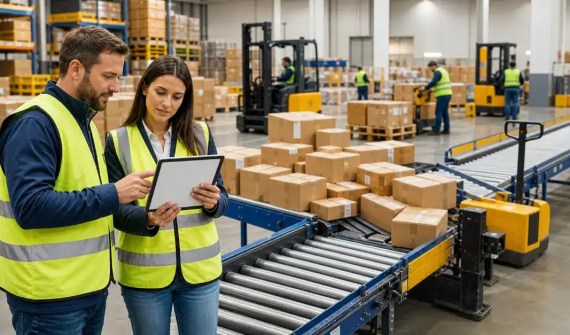
Supply chain system testing feels different when late September hits. Orders start to climb, weather gets cooler, and everyone is talking about Black Friday, Cyber Monday, and tight delivery promises. That is when every small issue in your warehouse or ERP setup turns into a big problem on the floor.
As peak season ramps up, you are dealing with tighter delivery times, more returns, and higher customer expectations. At the same time, labor is tight, carrier capacity is limited, and your partner network is more tangled than ever. The honest question is simple: is the old way of testing still enough?
Traditional supply chain system testing leans on scripts, small data samples, and a lot of manual checks. That might have worked when volumes were smaller and flows were simpler. Now, AI acceleration gives us another option, using real operational data, learning from it, and testing full end-to-end flows across WMS, ERP, and more. What happens when you try to go into peak without that kind of help? That is what we will unpack together.
Where Traditional Testing Breaks Under Real-World Complexity
On paper, separate test teams for WMS, ERP, and TMS sound organized. In real life, that split creates blind spots. Each group can say their part passed, while the true issues sit in the handoffs between systems.
Common gaps show up in places like:
- Inventory status mismatches between warehouse and online store
- Order updates that reach one system but never make it to another
- Carrier routing rules that conflict across platforms
These are not edge cases when volume climbs. They are daily headaches. Yet many test cycles still focus on single applications, not the full chain from order promise all the way to delivery and returns.
Then there is the slow, brittle nature of classic regression. Large retailers and 3PLs often need weeks to rerun their test suites before a major code drop or configuration change. That delay leads to bad choices: either rush a Go Live with incomplete testing or push it back so far it lands right on top of peak season.
Manual or script-based testing also struggles with real edge cases. Think about:
- Split shipments across multiple facilities
- Carrier capacity caps on busy days
- Multi-node fulfillment, including stores, DCs, and micro-fulfillment
- Temperature-controlled SKUs with strict handling rules
To make this more concrete, consider:
- A promotion that drives a spike in BOPIS orders, forcing split shipments from multiple stores and DCs at once.
- A winter storm that suddenly reduces carrier capacity in one region, requiring rapid rerouting through backup carriers and nodes.
- A food and beverage brand shipping frozen and ambient products in the same cart, with different packing and handling rules that must align across WMS, TMS, and ERP.
These are messy, layered scenarios. Scripts built by hand usually cover the simple path, not the strange but common mix of promotions, carrier limits, cut-off times, and returns that show up in late November.
Practical Risks of Testing Without AI Acceleration
When testing does not keep up with real complexity, risk spreads quietly across systems. A small WMS tweak, like changing wave criteria or pick path logic, might look safe when tested in isolation. In production, that same change can trigger:
- Different pick timings that break order promising in your front-end
- Misaligned shipment structures that confuse TMS or rate shopping
- Billing discrepancies in ERP when units, weights, or service levels do not match expectations
For example, a seemingly minor change to cartonization rules in WMS can alter how many cartons an order is split into, which in turn changes freight charges in TMS and invoice amounts in ERP.
These issues are hard to catch in advance with only manual testing and a few handpicked scenarios.
Latent defects often hide until you hit true peak volume. A system that seems fine with modest load can struggle when:
- Thousands of concurrent orders are released in tight windows
- Re-slotting and replenishment spike at the same time as outbound
- Frequent status updates hit APIs, queues, and integration layers all at once
To illustrate:
- A flash sale releases a large batch of orders just as inbound trailers arrive, overloading both picking and receiving teams.
- A new automation system sends high-frequency status updates that saturate an integration layer, delaying confirmations back to the website.
Recreating that kind of pressure by hand is tough. Spreadsheets and a few testers clicking through screens will not show you how a message queue chokes under heavy traffic or how a tiny delay in one integration can ripple through cut-off times.
Without AI-accelerated validation, the response pattern is familiar: more war rooms, more manual workarounds, and more overtime. People on the warehouse floor start bypassing system flows just to get orders out the door. Leaders burn time on triage instead of improvement. Recovery from a shaky Go Live takes longer, and confidence in future changes drops.
How AI Acceleration Reshapes Supply Chain System Testing
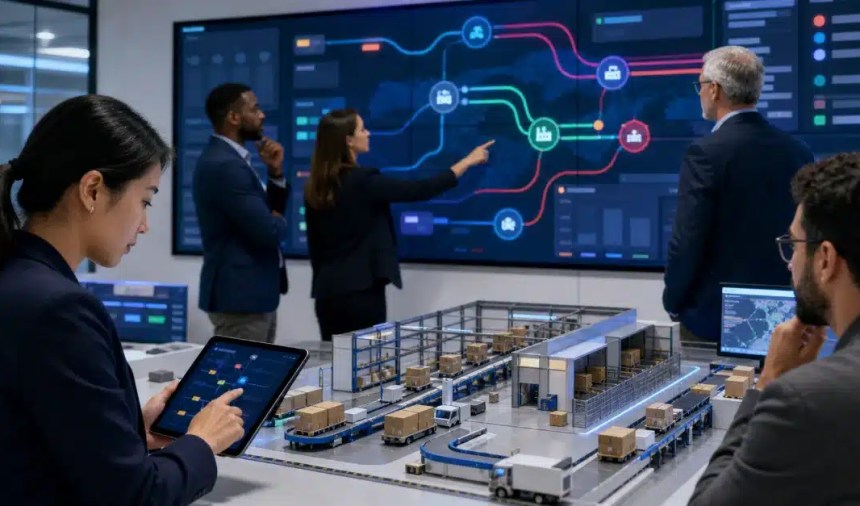
AI does not replace supply chain expertise, it amplifies it. With AI acceleration, testing becomes less about guessing which cases to run, and more about letting your real data guide the story.
Data-driven scenario generation is a key shift. AI can read:
- Historical peak-season order patterns
- Exception logs and incident reports
- Operational KPIs like cut-off compliance, dock congestion, or pick rates
From there, it builds test scenarios that mirror your true business behavior. That means tests shaped around promotions, carrier limits, labor shifts, and cut-off behaviors that actually happen, not just what we think might occur.
For example, an AI engine can:
- Detect that certain SKUs consistently drive late picks on Saturdays, and generate targeted scenarios around those SKUs, shifts, and carriers.
- Identify that orders with three or more line items and mixed temperature requirements are overrepresented in past service failures, and prioritize those combinations in test suites.
An AI-enhanced platform like Cycle focuses on adaptive coverage. Instead of static script libraries that age out, the system learns from:
- Prior test runs and their outcomes
- Production incidents and root causes
- New flows as you add partners, sites, or automation
This learning drives smarter test suites across WMS, ERP, TMS, and automation systems, filling in cross-system gaps that teams often miss when working alone.
The payoff shows up in release cycles. With AI doing the heavy lifting on scenario generation and regression selection, enterprises can shrink test timelines from weeks to days. That creates space for multiple safe releases before peak, smaller batches of change, and a lot more confidence heading into Go Live.
Real-World Use Cases Before Holiday Go Live
Consider a retailer getting ready for Black Friday and Cyber Monday. Promotions, safety stock rules, and carrier choices all mix together. AI-driven testing can stress test:
- Aggressive discount rules combined with low inventory buffers
- Carrier selection logic when service levels are tight
- The impact of split shipments when one node runs short
For instance, the retailer can:
- Simulate a site-wide 40% discount layered on top of free shipping thresholds, and see how that drives order profiles that challenge packing stations and small-parcel carriers.
- Validate that when a primary carrier reaches capacity in a specific region, the system correctly cascades to approved backups without breaking promise dates.
By surfacing the combinations that lead to overselling or missed promise dates, teams can fix issues before thousands of shoppers hit the site at once.
For a 3PL onboarding a new client just ahead of peak, the risk is different but just as real. Each client brings:
- Unique order profiles and shipment frequencies
- Specific SLAs and delivery promises
- Custom labeling, packing, and compliance rules across multiple sites
AI-accelerated testing can simulate that client profile at scale, across all involved facilities, and flag gaps in putaway strategies, packing setups, or label formats that would otherwise show up on day one of operations. For example:
- Running thousands of simulated orders that mirror the client’s carton mix, destinations, and accessorial requirements, and checking that each site prints labels that meet retailer compliance specs.
- Testing peak-day waves to confirm that SLAs for priority orders are met even when standard orders are queued at high volume.
A manufacturer rebalancing inventory across DCs late in the year faces pressure on service levels while shifting stock. AI-enhanced testing helps validate:
- Cross-dock flows and rapid transfer patterns
- Interfacility transfers and allocation logic
- Order promising when supply is moving between nodes
For example, the manufacturer can:
- Simulate sudden demand spikes in one region while inventory is in transit between DCs, and verify that order promising reflects in-transit stock correctly.
- Test scenarios where cross-dock volume temporarily exceeds normal capacity, confirming that staging locations, task assignments, and appointment scheduling still function as expected.
That level of validation gives teams confidence to adjust inventory strategies quickly without guessing how changes will ripple across the network.
Moving From Heroic Testing to Repeatable Assurance
Many supply chain teams still rely on what we might call a hero culture. A few experts pull long hours before cutovers, checking flows by hand, building last-minute scripts, and babysitting go-live weekends. It works, until it does not, and it does not scale as your network and partner list grow.
The shift is from one-time heroics to repeatable assurance. Instead of gearing up for one big testing push each year, AI and automation support a steady rhythm of validation across every release, large or small.
A practical starting path might look like this:
- Pick one high-impact Go Live on the horizon.
- Focus on a single, high-risk end-to-end flow, such as omnichannel fulfillment or returns.
- Use AI-accelerated testing to expand coverage for that flow across all systems.
- Turn those scenarios into reusable, automated tests that run before every related change.
For example, you might start with ship-from-store, building AI-generated scenarios around store inventory accuracy, carrier pick-up times, and weekend staffing patterns. Once those scenarios are automated, they become part of every pre-release regression cycle that touches store operations, carriers, or online order flows.
As we continue to build and refine the Cycle platform, our goal is to help teams move away from hoping their scripts are enough, and toward knowing their full ecosystem has been tested in ways that match real life. When peak season pressures arrive, confidence should come from repeatable assurance, not from crossed fingers and overnight war rooms.
Get Started With Your Project Today
If you are ready to reduce risk and improve performance across your distribution and fulfillment operations, our team at Cycle Labs can help you move quickly and confidently. Explore how our supply chain system testing platform validates complex workflows before they impact your business. We will work with you to map your current systems, identify gaps, and set up automated tests tailored to your environment. To discuss your project and next steps, simply contact us.