




Acceptance Criteria vs. Acceptance Testing: Clarifying the Confusion
Sometimes it feels like the Wild West when it comes to IT and business terminology. For example, countless frameworks offer structure, yet each introduces its own overlapping vocabulary. From Agile to quality engineering, the terms we use often depend on our background—and context changes everything.
Specifically, “acceptance criteria” and “acceptance tests” are two such terms. They’re frequently confused or used interchangeably, yet they play distinct roles in the software development lifecycle. Let’s break them down.
What Are Acceptance Criteria?
Acceptance criteria are the specific conditions that define when a piece of work is complete and acceptable. In practice, they describe what needs to happen for a user story, feature, or requirement to be considered “done.”
Think of them as the “what.”
For example:

This is a condition of satisfaction. It tells the team what success looks like.
What Are Acceptance Tests?
Meanwhile, acceptance tests validate whether those criteria have been met. These are actual, structured tests—either manual or automated—that confirm the work behaves as expected.
They define the “how.”
Depending on complexity, one acceptance criterion might require several acceptance tests to fully verify. A passing test signals that the system works as intended and the requirement has been fulfilled.
For example:

Are Acceptance Tests Always UAT?
Not necessarily. User Acceptance Testing (UAT) focuses on end-user validation, often via manual steps. But acceptance tests can exist at different technical layers.
Example:
- A developer writes a unit test to verify correct number rounding.
- A QA tester writes an integration test to ensure modules communicate correctly.
Both serve as acceptance tests if they validate agreed-upon criteria.
Acceptance in the Testing Pyramid
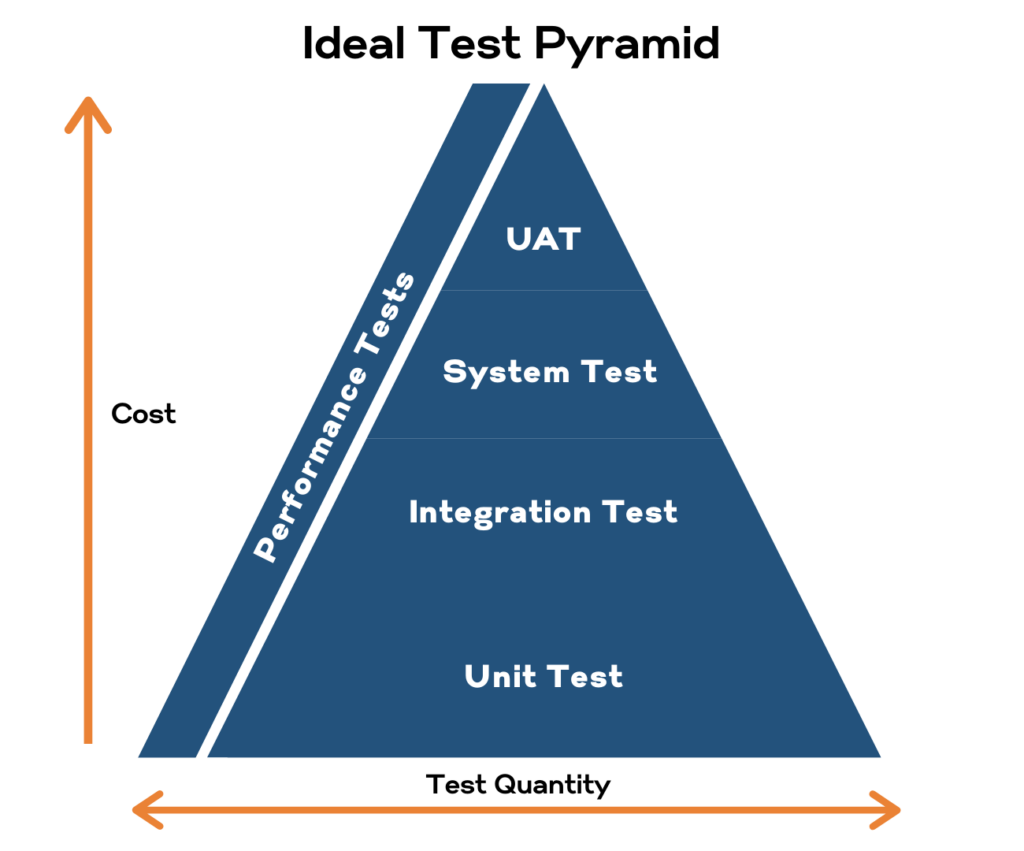
To illustrate, in the testing pyramid model:
- Unit and integration tests validate acceptance criteria at lower levels.
- GUI or user-facing tests represent UAT at the top.
In complex systems like warehouse management software, acceptance tests can occur at multiple levels—unit, integration, system, and GUI—to reflect the range of needs.
How Are They Used and Formatted?
When it comes to formatting, here’s where things vary by context. Acceptance criteria and tests appear in many forms:
- In Agile, as conditions in user stories
- In contracts, to define completion and sign-off
- In business process validation and behavior-driven strategies
- In test management systems as part of test cases or features
Common formats include:
- Given/When/Then statements (e.g., Gherkin syntax)
- Tables with “Action” and “Expected Result”
- Checklists or structured requirements
Regardless of format, the goal remains the same: shared understanding.
Why Collaboration Matters
Ultimately, the “acceptance” in acceptance criteria and tests implies collaboration. These tools aren’t meant to be written in isolation.
They should:
- Be reviewed and refined together
- Serve as the foundation for test automation and reporting
- Guide development from start to finish
Whether it’s a customer and vendor or a product owner and dev team, everyone should align on what “done” means.
Key Takeaway: Write Acceptance Criteria Together
In summary, acceptance criteria and acceptance tests are not just documentation—they’re alignment tools. Used correctly, they drive clarity, reduce defects, and improve delivery.
Write them together. Revisit them often. Use them early and throughout development. And let them guide your testing strategy.
Interested in how this fits into test automation for WMS or enterprise systems? Explore our success stories, read more blog posts, or learn how the Cycle platform helps bring clarity to enterprise testing.